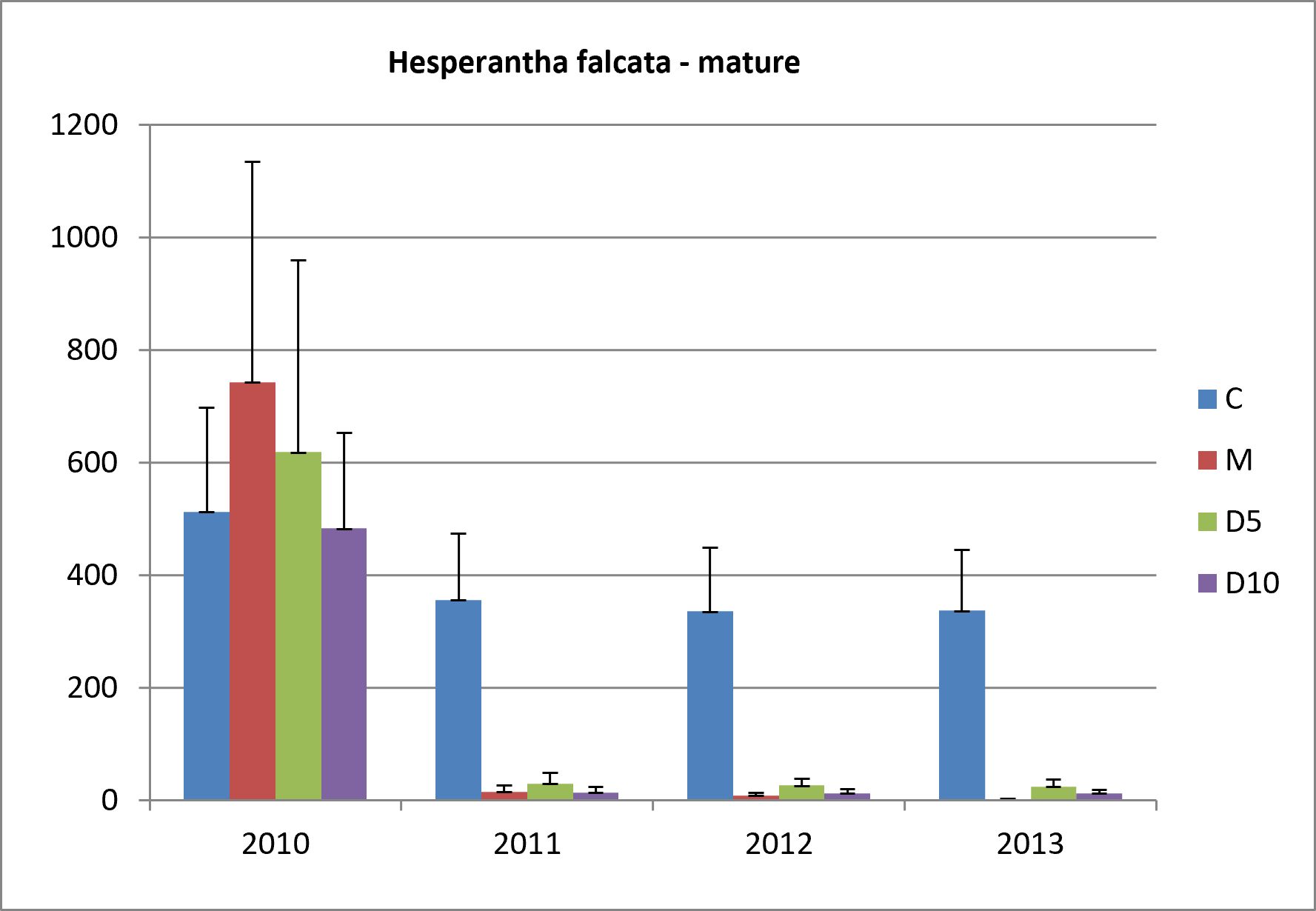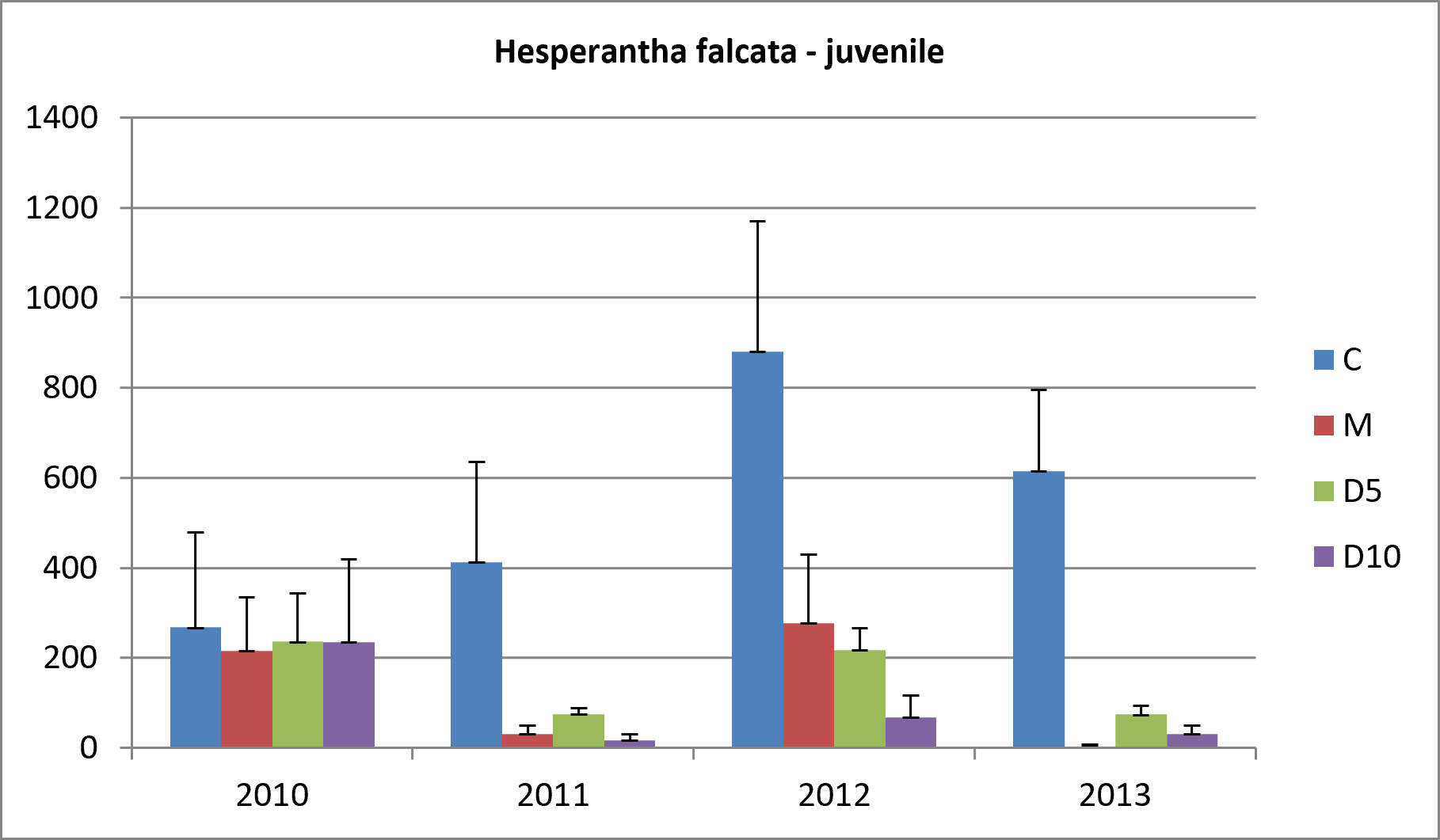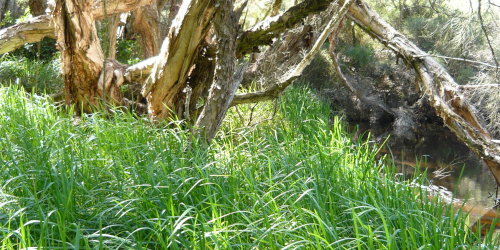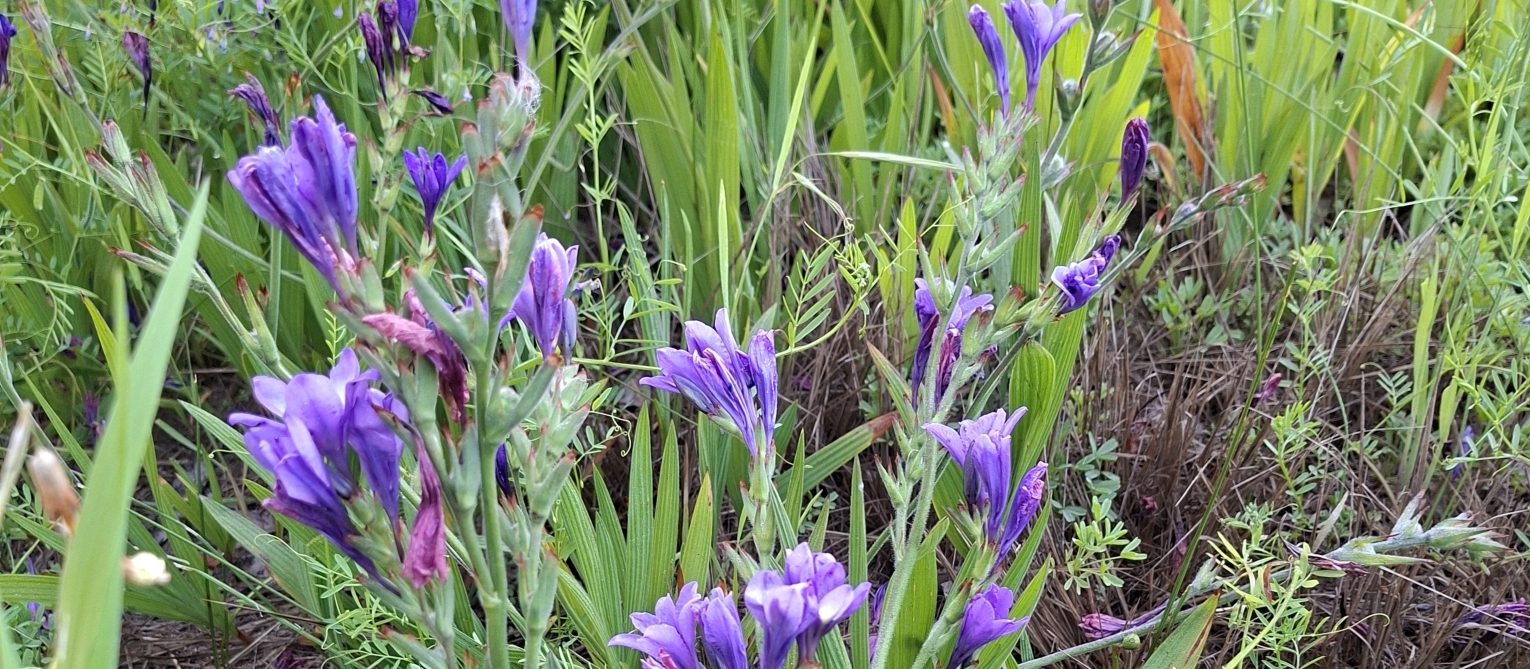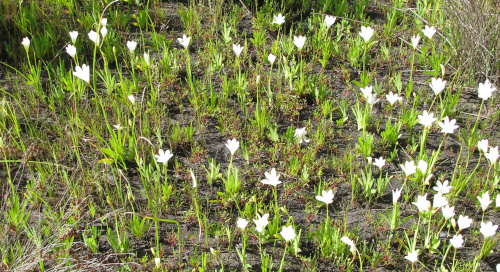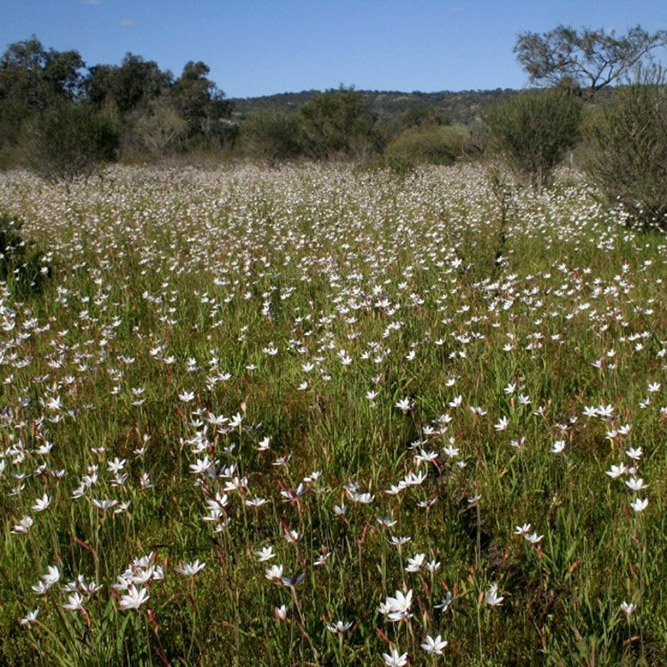



Hesperantha (Hesperantha falcata) is a South African corm (similar to a bulb) species that has become a significant weed in bushland ecosystems across the Swan Coastal Plain and Perth Hills. Control is challenging, as herbicide effectiveness is limited by the plant’s size and leaf surface area, as well as the sensitivity of the environments it invades.
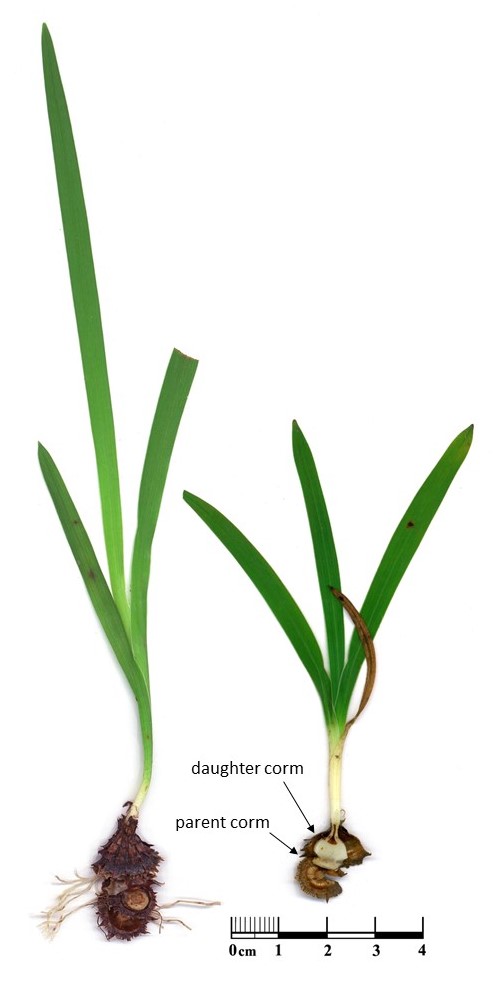
Hesperantha starts growing in early winter, flowers in early spring and dies back over summer. At the onset of the growing season, hesperantha draws on stored resources in the parent corm formed the previous year to produce leaves and flowers. As these reserves are depleted, the plant begins producing a daughter corms. These enable persistence into the following season.
Timing is critical for effective herbicide control. It is best to apply herbicide when the parent corm has just shrivelled, and the daughter corm is still developing. If applied too early, the parent corm might still have enough resources to survive herbicide application. If applied too late, the plant may have already produced a daughter corm, that is unlikely to be affected by treatment.